
Is Online Therapy as Effective as In Person?
For many adults, the format matters far less than the fit and the consistency of the work.
Video therapy has become a common way to get care. Here is an honest look at when it works well, when it may not be the right choice and how to make it useful.
On This Page
Guide
The short answer
For many common concerns, such as anxiety, depression, stress and life transitions, research has generally found that therapy by secure video works well for many adults. The things that seem to matter most are the same in either format: a good working relationship with your therapist, a clear focus and showing up consistently.
Online therapy is not automatically better or worse. It is a different setting for the same conversation. For some people, the convenience makes regular sessions possible when an office visit every week would not be. For others, the home setting makes privacy or focus harder.
The more useful question is usually not whether online therapy works in general, but whether it will work for you, with your schedule, your space and your concern.
It also helps to be clear about what online therapy means here. I mean live, one-on-one sessions with a licensed clinician by secure video, not an app, a chat service or prerecorded content. Those can be useful for some people, but they are different kinds of support.
Where video therapy tends to help
The biggest advantage is access. There is no commute, no waiting room and no need to leave work early and fight traffic. For adults with full schedules, caregiving responsibilities, health limitations or long distances to travel, that can be the difference between steady therapy and none at all.
Consistency matters in therapy, and video makes it easier to keep appointments during busy seasons. It also allows people to work with a clinician who fits their needs rather than simply the closest office. Some people also find it easier to open up from a familiar place.
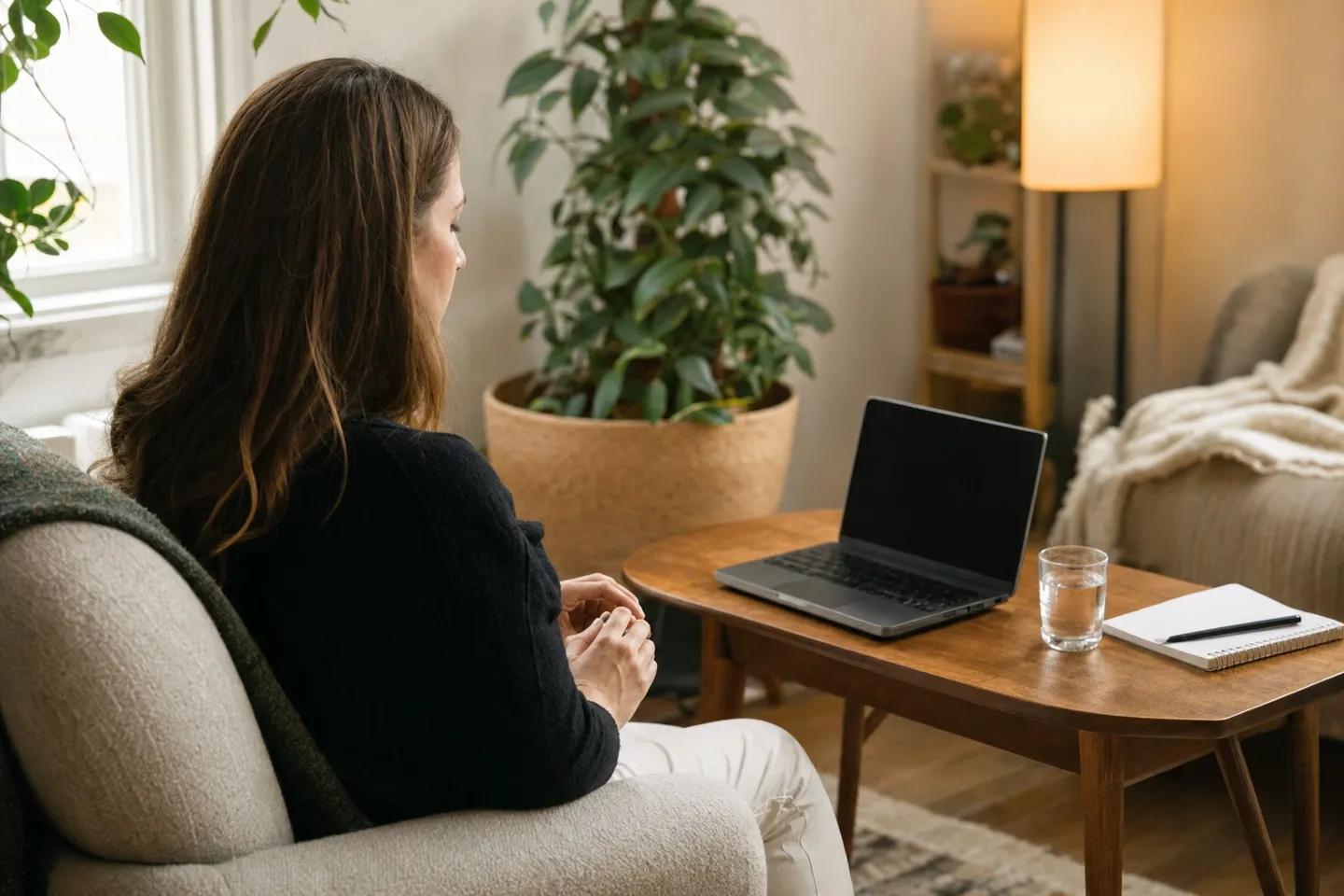
Video sessions also make it possible to continue care across a state. I work only by secure video with adults located in Connecticut, New York or Massachusetts, so a person can meet with me from home or another private place, as long as they are physically in one of those three states during the session.
Video also removes some of the small barriers that make it easy to cancel. There is no weather to drive through, no parking to find and no need to arrange extra time around the appointment. For people managing a health condition or limited energy, that can matter a great deal.
- No commute
- Easier consistency
- Familiar setting
- Wider choice of therapist
When it may not be the right fit
Online therapy is not the right format for everything. If someone is in crisis or at immediate risk of harming themselves, they need emergency support right away. Call or text 988, or call 911 in an emergency. Some conditions also need a higher level of care, such as intensive programs or in-person medical support.
Practical factors matter too. If you have no private place to talk, or if someone at home may overhear or interfere, video therapy may feel unsafe or restricted. An unreliable connection can also make sessions frustrating.
Some people simply prefer being in the same room with their therapist. That preference is valid. If you know you would struggle to engage through a screen, it is worth choosing a format you will actually use.
This site is not monitored for emergencies. If you are in crisis, call or text 988, or call 911.
How to get the most out of video sessions
Treat the appointment like any other important meeting. Choose a private room, close other windows on your device and let people nearby know you are unavailable. Headphones can add privacy. A few minutes to settle before and after the session helps you arrive and leave with some space.
Be honest if something about the format is getting in the way. If you feel distracted, cut off or less connected, say so. We can adjust, whether that means changing where you sit, turning off self-view or talking about what is hard to say.
Remember that you need to be physically located in a state where your therapist is licensed during each session. If you expect to travel, raise it early so we can plan.
It can also help to keep the same setting from week to week when possible. A familiar chair, a closed door and a few quiet minutes beforehand can signal to your mind that this hour is set aside for you. Small routines like these often make video sessions feel more grounded.
How I work by video
All of my sessions are held by secure video. My approach is direct and practical, and I draw from Cognitive Behavioral Therapy, Motivational Interviewing, DBT skills and solution-focused work depending on your goals. The format changes the commute, not the attention we give to the work.
I have spent more than 30 years in behavioral health, including years leading hospital and state programs before opening my private practice in 2014. I bring that experience to focused, one-on-one therapy with adults.
If you are wondering whether video therapy could work for you, a free consultation is a good place to find out. You can ask practical questions about the format and decide whether my style fits. Visit the Work With Me page to request an appointment through the secure client portal.
Some people start therapy by video expecting it to feel distant and find that it quickly feels ordinary. Others take a few sessions to settle in. Either experience is common, and we can talk openly about how the format is working for you.
Common Questions
Questions People Ask
Is online therapy private?
Sessions take place on a secure video platform. Privacy on your side depends on your setting, so choose a private room, use headphones if others are nearby and join from a device you control.
What if my internet connection drops during a session?
Brief interruptions happen. Rejoin when you can. If connection problems keep recurring, we can talk about practical fixes such as changing rooms or devices.
Can I do online therapy while traveling?
You must be physically located in Connecticut, New York or Massachusetts during each session with me. If travel will take you elsewhere, tell me beforehand so we can plan appropriately.

When You’re Ready
Let’s talk about what would help.
Begin with a free consultation. We will discuss what brings you here and whether working together feels like a good fit.
Request an Appointment